Showing posts with label living world. Show all posts

Week 4 Homework

Your Project - Something Beginning With G


  • You could make a model
  • Draw a picture or a Diagram
  • Do an Experiment and take Photos
  • Write a Report or a Story
  • You Choose
Here are some experiment examples - G for Growth

Closing a Pine Cone

Growing Mustard Seeds

G for Gravity Experiment


True or False?

Is this a real animal or is it  a trick?

True = it's real
False = I think it's a trick

Justify your thinking - give a reason.
Why you you think it's a trick?
What makes you think that it's real?


Extra:
Give a name to these creatures.
Why would you give them that name?
Identify special features.
What would this animal be good at and why?

Herbivore - Carnivore - Omnivore?


The Water Cycle

Understanding the water cycle is an important part of understanding how living things can survive all over the world.


Watch the video and count all the places where the water goes.
How many are there?


What is the word that we use to explain when the water is going up to the clouds?
It begins with e?
Can you explain what is happening?


Do you know the big word for rain, snow and hail?
It begins with p?


Always a Bigger Fish!

What does this cartoon show?
Do you think this really happens in nature?
What does the smallest fish eat?
Who eats the biggest fish?


Take a look at this then!


Energy Pyramids

Take a look at these energy pyramids.
This is a special diagram that shows something.
What do these pyramids show?


Talk with a buddy.  How many ideas have you got? 
2, 3 or even 4 different things are being shown - what are they?


Powelliphanta Snails

This video is a short film showing the 

Powelliphanta Snails 

This snail is native to New Zealand.  
It is not found in any other part of the world.


You will not believe this!
Watch what happens.
What does this tell you about this snail?


The Living World

Here are some photos showing our thinking about the connections and relationships between different parts of the living world.


Click to enlarge them.


Living World Vocabulary

Tomorrow we will do a brainstorm of the topic words that we have been using for our learning about the natural environment. Start thinking.

Photosynthesis Song


We have been finding out about the process of Photosynthesis.  

  • Watch these two video songs.
  • Which one do you like the most? Why?
  • Which one has the most information in it?
  • Which one is the most memorable? Why?


Carnivorous Plants


  • How is this possible?
  • What is happening here?
  • Have you ever seen one of these plants? Where?
  • Maybe this is just a late April fool joke?

Native New Zealand Animals


Can you name these native New Zealand animals?
Find out some information and add it to this online learning page.
Find a picture of another New Zealand animal and add that too.

Decomposition in Action

Watch this short time-lapse video showing what happens to fruit and vegetables as they decompose.


Which things decompose the fastest?


Are these items just drying out? How do you know that?


Which things last the longest?


Is there anything that surprises you?

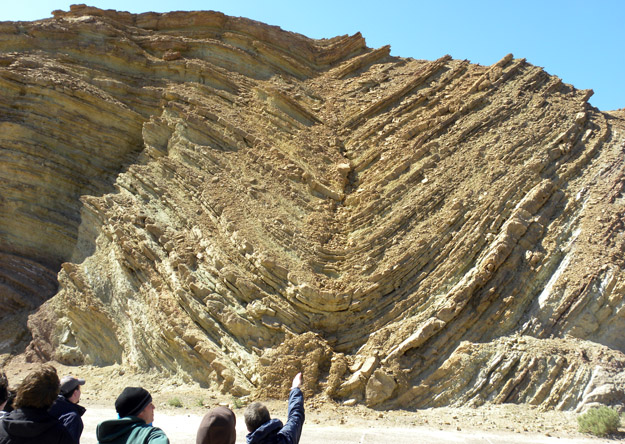
Geology - Rock Formations

Take a look at these images and see if you notice the different rock layers.  
Can use see the folding patterns?
Can you see the different colours of the rock?


Metamorphosis 2


Metamorphosis means to change from one form into another.


Many animals (especially insects) go through a metamorphosis when they change their body shape completely so that they can spread their species to new places.  


Some of these insects live the first part of their lives underwater and then become a flying insect.  Some begin their lives as worms or grubs and then change into flying bugs.


Watch this short video showing a monarch butterfly.


Metamorphosis

Watch this transformation.
On Friday we found a large Damselfly larvae in the water.
Watch how they change in this video clip.


Groynes Trip

Many thanks to all parents who helped out with transport to the Groynes on Friday.


We will be telling you more about what we found out in future postings.


Check out the photos on the web album.